My thanks to Tor Klaveness at Kapital, Norway’s oldest and leading, business magazine. Below is an English translation, then the Norwegian original. – Tom O’D.
“Bone-crushing” and “draconian”: The law that could choke Putin’s oil revenues
If peace talks between Ukraine and Russia break down, the US Senate is ready to pass a sanctions package that could strangle Russia’s oil exports. In that case, it could significantly strengthen the oil market.
Energy Published 29 Nov. | Paywall removed, Updated 9 Dec.
“President Trump said this weekend, ‘Send me the bill.’ So we have to send him the bill to help end this war.”
Dr. Thomas O’Donnell, energy and geopolitical strategist
This was stated by Republican Senator Lindsey Graham in a panel debate on November 19 with Democratic Senator Richard Blumenthal. The debate was moderated by Clayton Seigle, a senior fellow at the think tank Center for Strategic and International Studies (CSIS), which also organized the debate.
The bill Graham referred to is the Sanctioning Russia Act , which he is co-sponsoring with Blumenthal. The bill already has the support of 85 of the 100 US senators and would give US authorities the right to impose punitive tariffs of no less than 500 percent on countries importing Russian energy.
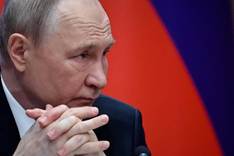
PHOTO: Alexander Kazakov, Sputnik, Kremlin Pool Photo via AP/NTB
With a stick and a carrot
Dr. Thomas O’Donnell is an energy and geopolitical strategist, founder of GlobalBarrel.com and former global fellow at the Wilson Center in Washington, D.C. He believes Congress is now poised to give President Trump an extremely potent weapon.
The proposal is being described as “bone-crushing” and “draconian,” and is set to be voted through almost unanimously in the Senate.
I was interviewed on CNN International’s “Newsroom” with host Kim Brunhuber – live, Friday, 12 Dec. 2025. The transcript is below. Kim asked about Venezuela’s oil industry, the impact of sanctions, what stricter enforcement could do to the Venezuelan economy, and what the US stands to gain if it ultimately gains greater access to the country’s oil reserves? He also wanted to know what Venezuelans are saying. / CNN says: “The show is broadcast around the world on CNN International, and in the US on our new platform All Access.”
Here is the video of our 10 Nov. event, organized by EIES (European Institute for Energy Security). Our topic was the turn in US Trump administration policy on ending Russia’s war against Ukraine and the Russian oil sector.
My sincere thanks to EIES, and especially Executive Director Albéric Mongrenier, for inviting me along with distinguished energy and geopolitics experts. (Note: EIES is affiliated with, but policy-independent of, SAFE in Washington).
Our distinguished expert panel included:
Dr. Jaak Aviksoo, Former Minister of Defence of Estonia, EIES Energy Security Leadership Council
Christof Rühl, Senior Research Scholar at Columbia University’s Center on Global Energy Policy, former BP Chief Economist
Dr. Thomas O’Donnell, Energy and Geopolitical Strategist and Founder of GlobalBarrel.com
Moderated by Rosemary Griffin, OPEC+ Lead Reporter, S&P Global Commodity Insights
Opened by Peter Flory, Senior Fellow, EIES, Former NATO Assistant Secretary General
A central question we addressed was the turn in the Trump administration policy to apply significant coercive measures against the Russian oil sector to undermine the ability of the Putin government to continue its was in Ukraine. We discussed how effective the new sanctions on Rosneft and Lukoil might be and what is the synergistic effect of the Ukrainian drone and missile campaign against Russian domestic refineries and oil export terminal ports.
For an update on expanded attacks on Russian Black Sea oil ports and their meaning, see the written comments accompanying my Kanal24 video interview, posted on Monday, 17 Nov. “The US & Ukraine pound Russian oil | my Kanal24, Kyiv“).
On 5 November, I told Kanal24, Kyiv that a US-Ukraine campaign to disable the Russian petrostate’s oil sector is underway. I stressed that this is a multi-spectral campaign combining (i) severe USA sanctions and secondary tariffs on Russian oil exports in parallel with (ii) Ukrainian military action on oil refineries and export-terminal ports. These attacks are known to be conducted and planned in close cooperation with USA military intelligence (FT,12 Oct.).
This means that an assessment of either aspect of this campaign on its own is inadequate. The synergy of sanctions plus military hits is the issue.
Secondary Sanctions. It has been widely recognized that the USA would need to, as promised, vigorously impose secondary tariffs on any entities that violated its recent tariff announcement. Indeed, on Sunday, President Trump lent support to a bill being drafted in Congress to hit any entity “doing business with Russia.”, not only buying its oil (i.e., “Trump says Republicans drafting bill to sanction countries that trade with Russia, Reuters. November 17). This sounds similar to the Senators Lindsey Graham (R, SC) and Richard Blumenthal’s (D Conn) so-called “bone-crushing sanctions” bill (Politico, 7 June) endorsed by 83 senators on 3 June.
The apparent aim of the port drone and missile attacks is to slash oil exports from Russia’s three or four biggest westward facing terminals. The focus thus far is on Black Sea terminals:
You are invited to register now for Monday, 10 Nov. at 14:00 UK || 15:00 CET || 9:00 ET, an EIES Webinar. [My view: the USA, Ukraine & allies can dismantle the Russian petrostate. My posts on this are linked at the end]. I’m honored to join experts:
Dr. Jaak Aviksoo, Former Minister of Defence of Estonia, EIES Energy Security Leadership Council
Christof Rühl, Senior Research Scholar at Columbia University’s Center on Global Energy Policy, former BP Chief Economist
Dr. Thomas O’Donnell, Energy and Geopolitical Strategist and Founder of GlobalBarrel.com
Moderated by Rosemary Griffin, OPEC+ Lead Reporter, S&P Global Commodity Insights
Opened by Peter Flory, Senior Fellow, EIES, Former NATO Assistant Secretary General
Dismantling the Petrostate: Moment of Truth for Russian Oil? – Webinar: Monday 10 Nov.
Register Now – Allies have so far failed to break Putin’s war machine. The EU recently agreed on a 19th round of sanctions and plans to further ramp down Russian energy supplies. But EU sanctions have shown their limits, political leaders have not been able to use Russia’s frozen assets to aid Ukraine, and Moscow’s hydrocarbons still flow into the Union and other major markets.
Washington’s and London’s most recent sanctions may change the game. As we enter another winter of war, can Europe and the United States build on hard-won Transatlantic convergence to strike a decisive blow to the engine of the Kremlin’s aggression: Russia’s oil exports? Can the EU agree to and successfully manage the phaseout of Russian oil and gas?
See the agenda below. If of interest, please register. Space is limited – acceptance is not guaranteed. Here’s the info, then the agenda:
⚛️ NUCLEAR ENERGY IN CENTRAL ASIA: REGIONAL ASPIRATIONS AND GLOBAL STAKES 🌍 On 4–5 September 2025, Warsaw will host a closed seminar focused on one of the key topics for the security and development of the region – nuclear energy in Central Asia. During the two-day seminar, experts will discuss: ✅ the aspirations of the region’s countries related to the development of nuclear energy, ✅ the political, economic and environmental implications for the region, ✅ the prospects for international cooperation and further development. The event is organised by The Opportunity Institute for Foreign Affairs and is closed to the public, but it is possible to register to attend using the registration form. A select group of invited guests will have the opportunity to participate in the discussion.
Dear colleagues and friends — there are two key energy aspects in this detailed interview with Nataliia Lutsenko of Channel 24, an all-news TV channel from Kyiv: (1) Ukraine’s attritional war on Russia’s domestic oil sector and (2) whether Ukrainian long-range drone capacities will be called upon (viz., permitted by the USA) to accomplish what the new US policy of ending Russian oil exports seeks to accomplish through secondary tariffs. Elaborating:
(1) Domestic Russian oil refining capacities: I explained that, If Ukraine can sustain these new drone attacks at a faster rate than Russia can repair them, this will be a major blow to the supply of diesel fuel required by the Russian war economy, especially to war industries, railways (i.e., to locomotive fuel), for harvesting of crops this fall, and to supply the war front and occupied Ukraine. The last time this was tried on a large scale, roughly two years ago, Ukraine caused significant hardships to Russian refining, but ultimately it did not achieve sustained damage at a rate necessary to collapse Russia’s immense national refining capacity. However, as I pointed out to Nataliia, Ukraine’s drone production and sophistication is now greater, and chances of success therefore better. We should know in some weeks or perhaps a few months if Ukraine can now overwhelm Russia’s repair capacities.
Already, fuel prices have spiked in Russia, with Moscow deciding to insure refiners receive a special subsidy they would otherwise not get due to high prices they are charging for fuel, to address difficulties with the renewed drone war. (Russian Refiners Hit Rough Patch, Hope for State Support, E.I., 20August25, [paywall].)
(2) Russian oil export capacities: Why does Ukraine’s war on the Russian oil sector not include destruction of Russia’s three westward facing oil ports, the terminals it uses to export the overwhelming bulk of its oil exports? These are Ust-Luga and Primorsk in the Baltic, and Novorossiya on the Black Sea. Why has the oil export capacities of these ports essentially never been hit?
This Friday, Trump and Putin will talk in Alaska about the future of Ukraine. Why has Putin asked for this meeting?
The two have spoken repeatedly on the phone …. but, something changed. As I indicated in my previous post (here), Trump has turned from his preferred plan to end the war, to one of confrontation and coercion of Putin (what I have called “Plan B”), aiming to force him into halting his war of aggression and seriously discuss peace proposals.
It was an honor to speak with Natalia Lutsenko of Channel 24 TV in Kyiv, and the Ukrainian national audience on these heavy issues of war and peace. The video interview – about 34 minutes long – goes into some detail of my analysis of the balance of forces.
The thesis of this video analysis (above) is that the USA, in coordination with its allies, has prepared an unprecedented “Oil War,” as I term it, against the Russian Federation to force either an end to Putin’s war on Ukraine, or the ruin of Russia’s oil sector, the main foundation of its war economy.
It is difficult to consider this to be anything less than an oil war, not merely a new sanctions or tariffs policy. Its aims to “permanently” destroy Russia’s capacity to export oil, should Putin not relent, an objective that the American Secretary of the Interior has persistently lobbied for inside the Trump cabinet.
This oil war has been in preparation, together with allies of NATO, the EU, the Saudis and various OPEC states, for several months, as I explain in detail in the video. In particular, as I endeavor to explain, the objective market balances of the past two or more years — of abundant surplus production capacity being held offline by OPEC and OPEC+, which far exceeds the total seaborn exports of the Russian Federation, taken together with the preeminent position of the USA plus its ally, Saudi Arabia — means that this objective should be very taken seriously.
In my view, media and expert commentary have simply not seen the full sweep of what has been in preparation since perhaps January, and certainly since April.
The media and both geostrategic and oil-sector commentators have been too focused on week-by-week, or even daily perspectives, and fail to consider the Trump administration’s longer term, consistent policy objectives in which these events are situated.
For some perspective, we should recall clearly that Putin, for his part, has twice weaponized the oil or gas prowess of the Russian Federation attempting to impose energy-sector and thereby geostrategic defeats on the USA — and on its European Union/G7 and NATO, Saudis and various OPEC-member allies. Consider:
— First, there was the oil price war of March 2020 – overtly aimed to “destroy” USA shale and, with it, the capacity of the USA to sanction Russian oil and gas. (See my analyses during those events.)
— Second, there was the weaponization of Europe’s over-dependence on Russian gas-pipeline exports in parallel to Putin’s full-scale invasion of Ukraine in 2022. This energy war aimed to force Ukraine’s European allies to abandon their solidarity with Ukraine under threat of severe energy shortages and high prices aimed at ruining the European economy. (See my many analyses during those events.)
Both these Russian-initiated energy wars, one in 2020 using oil, the other in 2022 using gas, failed. However, the consequences of the gas war persist in Europe and are still a major contributing factor in its de-industrialization and uncompetitiveness – indeed, the EU victory of 2022 over the Russian gas war may yet prove to be pyrrhic if Europe doesn’t drastically reform its energy policies in a coherent, scientific manner.
So, it is not so surprising that the USA should now lead a counter onslaught, an “oil war” against Russia with the geostrategic goal of forcing Putin to make an acceptable deal to end the Ukraine war.
Should Putin not relent to Trump’s demands to end the war, this USA-led oil-sector policy could, in my estimation (see the video), severely restrict the capacity of the Russian Federation to produce and export oil, and to continue its historical role as one of the three biggest players in the global oil market. This in turn, would ruin the Russian economy and capacity to maintain the current war production.
Putin’s pre-2022 European gas-market dominance (e.g., 40% of all imports were from Russia, and Gazprom owned much of European gas infrastructure) meant that he could weaponize this position to launch a second, energy front against Europe in support of his February 2022 full-scale military invasion of Ukraine.
Many have spoken of USA “energy dominance.” The economic benefits for the USA from the oil and gas fracking revolution have been seen. And, oil remains the world’s most geostrategic resource.
This reality should be taken as seriously, not simply as a trope. As I endeavor to explain in the video, the current particulars of the global oil market (the tech, finance,, resource base, production and spare capacities, and security arrangements of the market-centered, one “global barrel” energy security system, mean that, If the Trump administration and Congress proceed as threatened, the Russian oil sector will face an existential threat to its continuation.
Appendix: Some comments I made on LnkedIn on related issues.
Some argue that the recent EU lowering of the Russian oil price cap is a “big deal.” However, it is not. Here I explain/argue that “the Russian oil-price cap is all a waste of effort.” and that “a devastating, fundamental shift in approach has been prepared.” To wit:
The cap hasn’t failed because it is too high. It is a fundamentally ineffective policy. Russia’s shadow fleet is effective as a backdoor to evade the cap, exactly as most people in the oil sector – including me – predicated it would.
Russian oil has to be simply taken offline and this enforced via harsh secondary sanctions and/or tariffs. This *should* begin within a week, led by the USA.
There has long been plenty of withheld spare supply in OPEC, OPEC+, USA and elsewhere. It was a fundamental fallacy in 2022 that Russian oil needed to be kept online for market stability, and this fallacy/timidness led to the USA’s “novel” price cap fiasco.
Only “bone crushing” [Senators Graham (R, SC) & Blumenthal (D, Conn)] oil and gas sanctions can REALLY undermine Russia’s war mchine.
This has been Trump’s, his cabinet’s and Congress’ Plan B since January for Putin.
I would argue the Saudis et al (Gulf Opec) have been prepping/shaping the global oil market since then for the possibility of an epic, anti-Russian US-led oil-sanctions war.
(I suggest looking at how easily the Saudis crushed Putin-Sechin’s oil-price war of March 2020, at GlobalBarrel(dot)com)
NOTE Secretary of Interior Burgum has long advocated “destruction” of Russia’s oil sector, Energy Secretary C. Wright speaks positively of scenarios wherein Russian oil exports are replaced by others, including the USA.
We’ll know very shortly if Trump sticks to this Plan B for the war in Ukraine.
A huge confrontation will result. Russia may retaliate, somehow, in desperation. Infrastructure (Baltic? Atlantic?) and cyber attacks? Battlefield escalations, etc.? Spreading the war? What will China do? Will Putin consider a real “deal”?
Trump will again offer Putin, undoubtedly, at some point, inducements to end the war and move away from China towards Western investments, such as a return to oil & gas markets, etc.
The Trumpian “grand strategy” is to pull Russia away from China, isolating China but, if not possible, then devastate it’s ally, Russia.
This might fail, deepening their alliance. A devestating failure is if a greatly weakened Russia allowed China, which has 1/3 of global manufacturing, to arm Russia as it’s “cats paw.” Xi speaks tough till now on all this, rhetorically backing Russia vs. USA oil & gas sanctions & tariffs.
I should add that Ukraine has long been capable of smashing the oil-export infrastructure of Russia’s three big west-facing oil ports. Perhaps it will soon be allowed to do so?
Appendix: Some comments I make on the recent USA-EU tariffs deal (also form LinkedIn):
A key, analytically, is to see that Trump’s numbers should (obviously?) be taken qualitatively, not quantitatively. This implies, then, one should also take them, seriously.
The qualitative aspect here is that Trump has now gotten his ‘ducks’ (I.e., European NATO, EU trade and especially energy, and similarly Japan – “all in a row. This now allows him to transition to his “Plan B” vs. Putin -which will entail a severe energy shock to Russian oil & gas exports, and require an as-smooth-as-possible global oil-market reworking…. while maximally squeezing India & China. Von der Leyen et al are in on all this.
One should take as ominous his immediately cutting Putin’s days before the Western energy sanctions onslaught begins.
This required getting the NATO meeting and the EU & Japan deals done.
PS There is also a sig. Mideast angle here, re. presumed Trump/USA coordination with the Saudis/Gulf on OPEC/OPEC+ pre-shaping of the oil market for the oil-confrontation vs Russia.
I misspoke on EU agriculture. It’s not that the EU is “famous” for “tariffs” protecting its ag against imports, what it’s actually “famous” for are subsidies for its agriculture, which Trump has targeted as unfair. (Note: the EU’s higher farm subsidies are seen to be a significant factor in lower average EU vs. USA agriculture productivity growth since the early 1990s. See USDA here, esp. from p. 33 .)
I predicted a general settlement will be found before 1 August, and the EU will hold off on retaliatory tariffs to focus on negotiations.
MY COMMENTS: 1) USA long-planned surprise strategy 2) Iran leaders’ 20-year nukes brinkmanship strategy aimed for USA ssecurity-guarantee deal
ALL GUESTS – TRT-London, USA bombing
I was invited on TRT-World, London, 24 June, for a panel after US strikes on Iranian nuclear sites (see the panelist lineup below. I answered two questions at some length – see the 2nd video.)
In summary: Trump claims USA Operation Midnight Hammer “obliterated” the country’s nuclear capacity, but how much have they really been degraded?
My analysis is that it does not matter. If the USA decides to bomb again at will, without Iran having air defenses the USA and Israel can destroy or disrupt most any renewed Iranian work on its nuclear or conventional missile program. If, as he stated, repeat bombings as needed are Trump’s intention, then this should be the case. This now leaves Iran very little negotiating leverage. The regional proxies it always intended to use for retaliation in just such a scenario have been decimated by Israel.
Therefore, there is a high likelihood Iran will be forced by Trump to negotiate from a now much weaker position. If Tehran resists, it could fall back to rely on state-sponsored terrorist methods, which are of limited usefulness for maintaining a modern functioning state and economy.
Overall, I emphasize that this “12 Day War” has been especially motivated, by Trump, to assure USA Gulf allies that they can now safely enter into the Abraham Accords with Israel and the USA, establishing a new regional security structure. Trump will be constrained to do whatever is necessary, militarily and in negotiations, to insure the Iranian threat these allies have felt acutely remains under control. In turn, if these accords, which Trump’s chief negotiator, Steve Witkoff, was reportedly already working on among the USA’s Gulf Arab allies immediately after the USA bombing is intended to allow the USA to move on, focusing more squarely on Great Power competition elsewhere.
This is my general assessment. There are many details and some possible derailments here, of course. – Tom O’D.
The ceasefire Trump brokered will hopefully end this “12-Day War.” I want to discuss here why this war did not trigger a global energy crisis. [Here’s what I said about this to Al Jazeera last week, in the last five paragraphs. A PDF is also embedded below. I’ll also post a TRT-London show on Iran’s nuclear strategy, recorded Tuesday, soon.]
To assess the risk to energy supplies, understanding the aims of the combatants is key. Throughout this war, it was the USA-Israel side setting the agenda, and there were two strategic aims they could pursue. One was to “only” destroy Iran’s nuclear program and its existing conventional regional power-projection capacities. The second was to go beyond this to undermine the viability of the Islamic Republic, up to forcing a regime change. Why do I say this?
My comments are linked here:: -1- 02:21, -2- 06:52 -3- 14:30 -4- 20:50, but hear Aura & Oktay too!
I was happy to address Türkiye’s push to become a gas hub: both for its own domestic security of supply, and to become an indispensable supplier to the European market. I was on with esteemed gas-sector analysts Aura Sabadus and Oktay TanriseverI, and host Yusuf Erim. TRT is a state-supported Turkish national broadcaster. The Turkish, East Med, Central Asian, Caspian regions involved are fairly complex, and I will simply let the interview speak for itself. Turkey is making progress but needs to end market-price setting, as Aura Sabadus stressed – and I agreed, as well as further diversification of supplies. I stressed the self-destructive EU lack of interest in long-term new pipeline gas from Azerbaijan and Turkmenistan it could indeed contract for, which would all transit Turkey.
You will see (my 3rd answer) that I raised again my view that Europe will become ever more deeply in need (i.e., dependent) on natural gas imports, but is acting rather “schizophrenic” about this. Brussels et al seems not to be willing to face this reality. Natural gas importance and its geostrategic nature will only increase due, perhaps counter-intuitively, to EU over-dependence on renewables. But, where is the urgency, then, to sign long-term pipeline-gas contracts from neighboring states via a developing Turkish gas-sales hub? Such supplies would generally be cheaper than LNG imports, especially if the LNG is purchased on short-term spot markets. Indeed, even its main pipeline supplies now, from Norway, are reportedly mainly via short-term spot purchases (See Morten Frisch, Norwegian gas-sector veteran). I find this astonishing for both price and security of supply.
In the last two weeks, I was in Warsaw twice. First, for the Three Seas One Opportunity conference (3S1O) on 27 April, organized by the Opportunity Think Tank, where I co-chaired a session. This was an official side event of the Three Seas Summit (a ministerial conference). Second, for the Warsaw Security Forum’s Public Dialogue. (WSF) 7 May. I will soon post here about both these very interesting events.
However, I was asked by TVP, the Polish national broadcaster, to come to their Warsaw studios on 8 May, the day after the WSF, for a live-on-air commentary on the recent drama in the German Bundestag (parliament) where the new Chancellor, Fredrich Merz, embarrassingly failed to get the necessary votes on the first ballot. He finally succeeded on second ballot, after intense politicking and consultations within his party, the center-right CDU, in its Bavarian sister party, the CSU, and in his coalition-partner party, the center-left SPD.
So, first; I was asked to explain this surprising electoral fiasco for the new chancellor, Merz, and his party, and how it may have weakened his new government.
Secondly, Merz immediately, after being sworn in, undertook a one-day whirlwind trip to Paris and then Warsaw, to visit his prospective main partners in the European Union, President Macron of France and Prime Minister Tusk of Poland. (Continued ….)
El día de Pascua, 20.04, me entrevistaron en directo por radio, en muchas ciudades de Europa y del hemisferio occidental. On Easter Sunday, April 20, 2025, I was interviewed live in several cities of Europe and the Western Hemisphere.The interview was in Spanish. An English Google translation is below (RHS column). The topic was the negotiations of the Trump USA administration between Russia and Ukraine to end the war. Tom OD.)
Mi agradecimiento por la invitación de María Eugenia Plano, productora del programa radial Corresponsales en Línea, realizado por las corresponsales de los diarios Clarín y La Nación en París y Londres (María Laura Avignolo), París (Danielle Raymond), Madrid (Silvia Pisani), Berlin (Araceli Viceconte), Washington ( Paula Lugones) y San Pablo (Cristina Veiga) con la conducción de Silvia Naishtat (Editora de Economía de Clarín). en vivo y en directo para Radio Ciudad en Buenos Aires, los días domingos de 10 a 12 AM Hora Argentina. My thanks for the invitation from María Eugenia Plano, producer of the radio program Corresponsales en Línea, made by the correspondents of the newspapers Clarín and La Nación in Paris and London (María Laura Avignolo), Paris (Danielle Raymond), Madrid (Silvia Pisani), Berlin (Araceli Viceconte), Washington (Paula Lugones) and Sao Paulo (Cristina Veiga) hosted by Silvia Naishtat (Economics Editor of Clarín). live and direct for Radio Ciudad in Buenos Aires, Sundays from 10 to 12 AM Argentine time.




 The Global Barrel